

January has a way of making me feel like I’m behind before I’ve even begun. In recent years, I’ve done my best to opt out of measuring up to all the new plans and goals.
Not because I don’t believe in change, but because I don’t believe it has to start with reinvention. Continuity offers true devotion and I think consistency is an overlooked language of love—whether that’s returning to a place or even a single meal. The steady practice of staying with something (or even someone) long enough to understand them lets things unfold at their own pace.
Fermentation has shaped the way I think about time and relationships in a special way. They don’t respond to pressure. You can’t rush them without consequences. You tend, you wait, you pay attention. Some days nothing seems to happen until quietly everything has changed.
That feels like a better model for a new year than most of what we’re offered.
I’m actively opting out of the narrative that January is about fixing myself or a situation. Fermentation reminds me that beginnings don’t need to be loud. They can be quiet and already in motion.
Fermentation is More
Fermentation has been folded into the language of self-help and wellness trends over the past few decades, especially with growing developments and interest in our microbiome. And while I find this research endlessly fascinating and love that fermentation offers nourishment while keeping me in a revelatory state, it’s still so much more.
Fermentation is a relationship with microbes, land, history, and culture. It’s a practice we’ve developed over thousands of years to preserve food, deepen flavor, and stay connected to place and season. The benefits to our bodies are real, but they’re not the whole story.
When fermentation is reduced to a product or a promise, we lose its magic. There is humility and joy in working with living systems instead of trying to dominate them. The cultural specificity of foods that come from particular people, climates, and traditions make them incredibly special.
One of the many ferments that comes to mind and has been sustaining me this winter is natto. Natto is so unique that the enzyme created during its fermentation—Nattokinase—was named after the ferment. And beautifully so, natto literally translates to “bean offering.”
Meet Natto
Natto tends to stop people in their tracks. It’s mucilaginous (or, lovingly, of neba-neba quality) and strong-smelling. It doesn’t try to be polite—this ancient staple from Japan has nothing to prove to you or me.
And yes, I love natto.
Natto is soybeans fermented by Bacillus Subtilis, a tenacious species of bacteria found in the air, the soil and many mammalian microbiomes. Once soybeans are cultured and begin their 20-hour fermentation journey, B. Subtilis produces enzymes that digest the soybeans’ proteins and carbohydrates, which in turn make their nutrients more digestible.
Nattokinase1 is the key enzyme created during fermentation, and the benefits of it are numerous. For one, it’s a reliable source of vitamin K2, which can only be produced through bacterial fermentation (sauerkraut contains it too), though natto provides up to fifteen times more than most K2-containing ferments. Vitamin K2 plays an important role in both bone and heart health.
Wonderfully enough, nattokinase is also effective in degrading protein aggregates, which are mis-folded, clumped together proteins, forming insoluble structures that build up in and around cells. These aggregates can lead to neurodegenerative disorders and diabetes. Studies on mice have shown nattokinase may be an avenue for the early prevention an treatment of Alzheimer’s Disease.2
In addition to breaking down protein aggregates, nattokinase acts as a natural blood thinner, amplifying our body’s natural defense against blood clots and reducing blood viscosity, which of course benefits folks who are prone to cardiovascular diseases or stroke.
As you can see, it’s hard to discuss natto without mentioning its large host of benefits for human health, and this is well-known in Japan too. Instead of, “Eat your sauerkraut!” Moms and dads tell their children: “Eat your natto!”
In Japanese tradition and culture
Natto’s origin story is not clear cut, as is the case with most fermented foods, but legends of natto date as far back as the 7th century. It’s said that Prince Shotoku, who was renowned for promoting Buddhism in Japan, first discovered natto after having wrapped the leftovers of boiled soybeans in straw bags for his horse. It was a delicious accident, as with most discoveries of fermented foods throughout history.
Another popular story recalls the travels of samurai warrior Minamoto no Yoshiie, who was campaigning between 1086 and 1088. One day, his troops were attacked while boiling soybeans for their horses. They hurriedly packed up the beans, and did not open the straw bags until a few days later, by which time the beans had fermented and they enjoyed them very much.
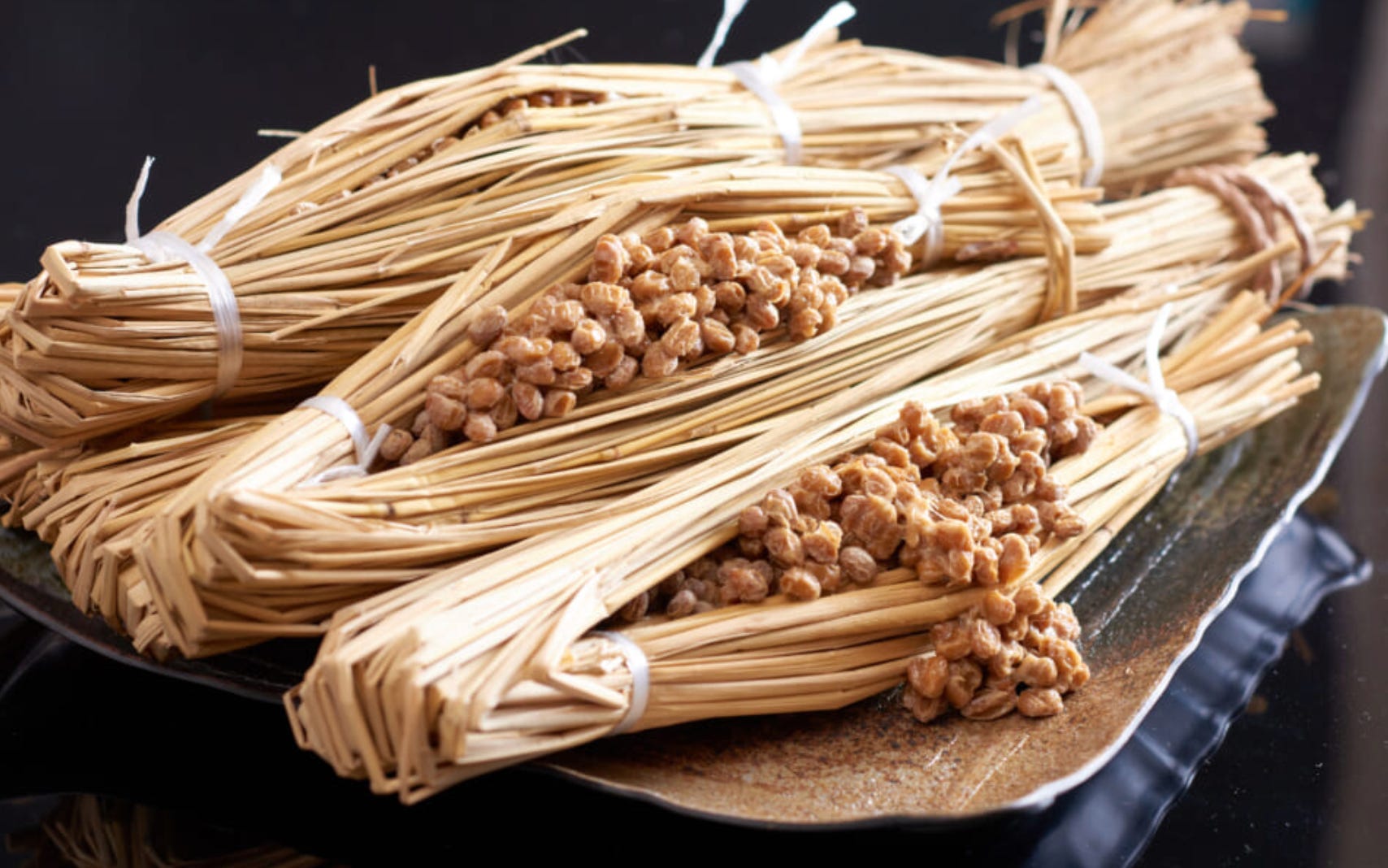
Mito City, in the northern Kanto region of Japan, is the birthplace of natto. It’s also said to be where Yoshiie first discovered the ferment. Historically, as according to both legends, natto was fermented in straw bundles. Today you can still find the traditional ways of natto fermentation, tucked into these adorable bundles, alive and well in Mito City.
How I like to eat natto
While traditionally a breakfast food served on rice with soy sauce among other delicious additions, natto can be enjoyed any time of day and marries nicely with many foods, especially different grain bases.
My first time eating natto was in 2013 while touring with my bus in Starkville, Mississippi. A newfound fermentation friend, Hiroko, invited me to dinner and served it on rice with seaweed and shaved mountain yam. It was divine! Currently, my favorite way to enjoy natto is for breakfast: I love eating it with oats and miso.
Natto oatmeal has become a regular part of my mornings, especially in winter. Breakfast is a powerful place to bring fermented foods in, not because it’s strategic, but because it’s intimate. It’s the first thing you offer your body. A quiet moment before the day asks anything of you.
If you feel intimidated or skeptical, that makes sense. According to surveys in Japan roughly 60% of people like the flavor, while near 15% actively dislike it. Unfamiliar textures and flavors can feel like a barrier. But I’d gently offer this: you don’t have to like something immediately to learn from it. Curiosity is enough to start.
Recipe: Natto Oatmeal
Yields one bowl of oatmeal, 10 minutes
Ingredients
-
1 tsp coconut oil
-
1/3 cup of rolled oats (I recommend Morganics Family Farm oats)
-
2/3 cup hot water
-
1/4 cup of prepared natto (see list of resources at end of post)
-
1 tbsp miso (South River Miso is my favorite)
-
Optional toppings: sesame seeds, greens, chili crisp, a soft-boiled egg
Process
-
Melt coconut oil in a medium-sized pan or pot on low to medium heat and add 1/3 cup of rolled oats, gently toasting the oats to bring out their flavor.
-
Add 2/3 c of hot water to the oats and turn down temperature, stirring until the water is absorbed.
-
Remove oatmeal from heat and let cool slightly (a minute or two), then add the miso and stir until fully incorporated and transfer to a bowl.
-
Stir natto vigorously until its consistency is nice and slimy, then add to your oatmeal.
-
Enjoy as is or add some fun toppings, such as soft-boiled egg and cooked greens. You can spice it up with chili crisp if you please!

Where to Buy Natto
NYrture Natto — fresh natto made in NY with local, organic soybeans
Ayas Culture Kitchen on Etsy — organic freeze-dried natto from Massachusetts
Pure Indian Foods Natto — dehydrated natto from a company with a lot of interesting food items!
Make it at home! I recommend sourcing the culture and finding the traditional smaller soybeans for natto first for best results. I may post my recipe here late rin the year if there’s interest.
If You’re New to Ferments
Fermentation can feel intimidating, especially if you’ve been told it’s complicated or risky or only for people who already know what they’re doing.
The mindset shift that helps most is this: fermentation is more forgiving than you think. Pay attention, stay curious, and let go of the idea that you’re supposed to be an expert before you begin. Don’t forget: all fermentations are gorgeous accidents.
Nattokinase owes its name to natto, a word composed of two separate kanji symbols. The first (na) translates as "to offer" and the second (tō) means "bean." Natto can be translated loosely as "bean offering". Kin in Japanese translates to microbe or bacteria and -ase is a common suffix for enzymes.
Nattokinase: Insights into Biological Activity, Therapeutic Applications, and the Influence of Microbial Fermentation (Nov 1, 2023) https://www.mdpi.com/2311-5637/9/11/950